
Headline Priority
America Can’t Win If America Can’t Build.
America became the world’s leading economy because it built things — roads, pipelines, power plants, factories, ports, and the infrastructure that connects them. Today, too many critical projects are delayed by years of red tape and uncertainty. Projects that should take years often take decades. The result is higher costs for consumers, weaker supply chains, and fewer opportunities for economic growth.
The Problem, in One Number
10years
The average time it takes to move a new interstate transmission line in the United States from conception to commercial operation — most of it spent in siting and federal permitting, before the first shovel turns.
Source: U.S. Department of Energy, National Transmission Needs Study (2023)
The Senator’s Position
Make it easier to build the projects America needs to compete, grow, and remain secure.
Senator Armstrong came to Washington with a simple goal: make it easier to build the projects America needs to compete, grow, and remain secure.
His approach is straightforward: create a permitting system that is predictable, efficient, and capable of delivering results while protecting the environment. That means modernizing outdated regulations, reducing unnecessary delays, and ensuring agencies work together to move projects forward.
“We are simultaneously overproducing and under-delivering. Fixing permitting is the most important step we can take to unlock investment, lower costs, and ensure American energy reaches American consumers.”
— Sen. Alan Armstrong
From pipelines and transmission lines to manufacturing facilities and data centers, Senator Armstrong is leading efforts to restore America’s ability to build.
Why It Matters
The country is paying for a permitting system that was built for a different era.
The data tells one story consistently. America has the labor, the capital, and the engineering to build the energy and infrastructure the next decade demands. What it does not have is a permitting system that lets any of it ship on time.
2,290GW
Stuck in the Queue
Total generating and storage capacity actively waiting in U.S. transmission interconnection queues at the end of 2024 — roughly twice the capacity of the entire installed U.S. power grid. Median wait time has more than doubled in the past decade.
Lawrence Berkeley National Laboratory, Queued Up: 2025 Edition
2.4years
To Complete an Environmental Review
Median time to complete a federal Environmental Impact Statement under NEPA, from the Notice of Intent to the final EIS, based on 1,903 EISs published 2010–2024. The clock starts after the agency declares an application complete — which itself can take years.
Council on Environmental Quality, EIS Timelines Report (January 2025)
252%
The “Boston Gap”
What working families in eastern Massachusetts pay above the national wholesale average for natural gas — not because the gas isn’t there, but because the pipelines to deliver it from American shale fields have been blocked at the state level for more than a decade.
Sen. Alan Armstrong, “America’s Energy Weakness Isn’t Overseas — It’s at Home,” The Hill, May 8, 2026
Our Priority
Permitting reform that actually lets America build.
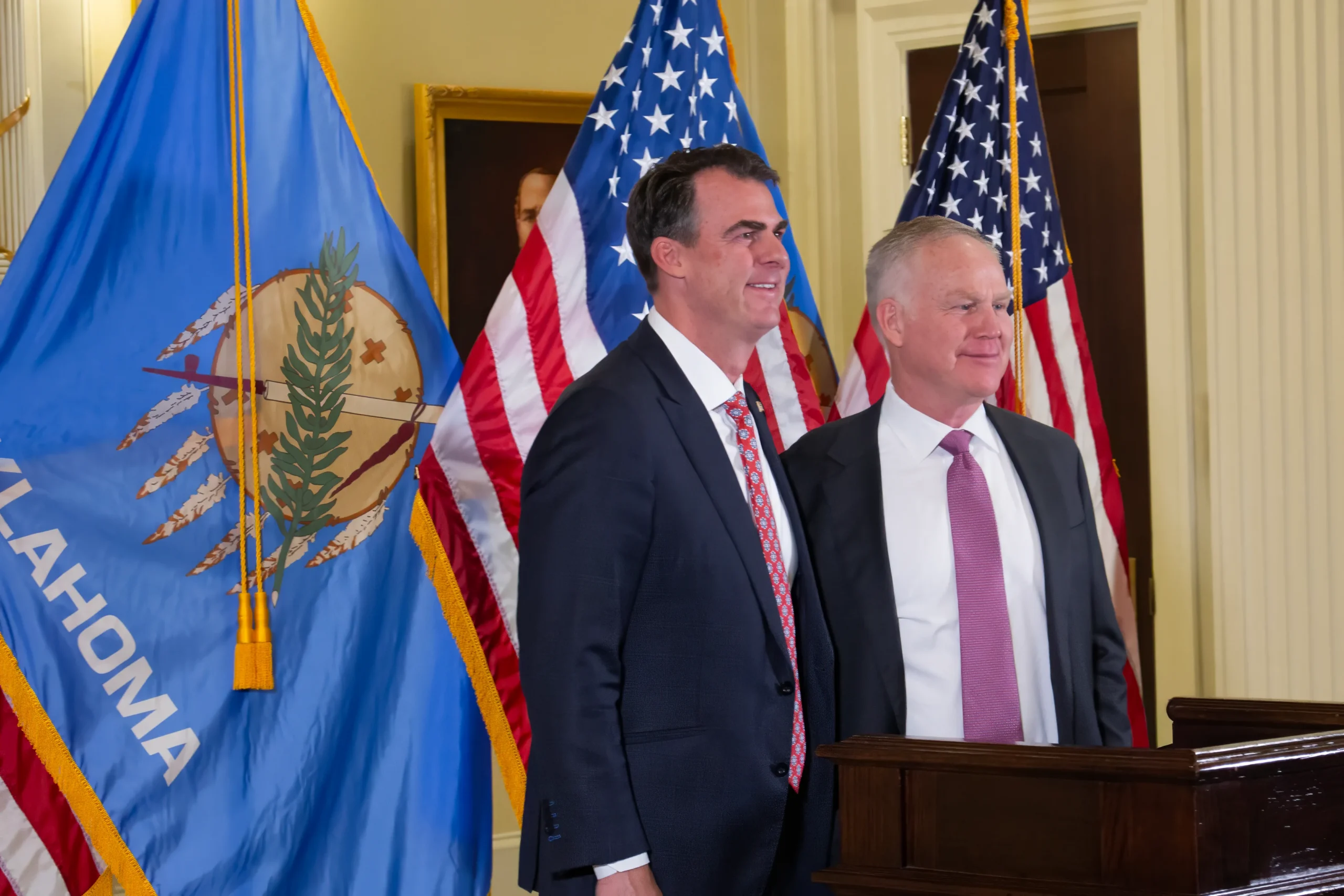
Senator Armstrong spent thirty-five years in the energy business, rising from engineer to CEO of Oklahoma’s largest company. He knows, from the inside, that the cost of a new pipeline, transmission line, or grid project in America isn’t steel, labor, or land — it’s the years spent fighting permits that should have cleared long ago.
“My short time in the Senate will be tightly focused on meaningful permitting reform to get Americans access to whatever affordable energy solutions they choose. Infrastructure is foundational to growing our economy, ensuring American energy independence, and driving innovative solutions that Oklahomans have always delivered.”
— Sen. Alan Armstrong · March 24, 2026
With limited time in this seat, Senator Armstrong is working with colleagues on both sides of the aisle to move a serious permitting bill — one that makes it possible to build the affordable, reliable, environmentally responsible energy infrastructure America needs.
The Framework
Policy Principles to Get America Building Again
Senator Armstrong’s permitting reform effort is guided by a simple test: whether a bill will make it possible to build again in America. These principles are designed to restore predictability, respect lawful permits, protect the environment, and ensure that federal permitting works for every kind of energy and infrastructure project America needs.
01
Approach must be energy source neutral.
Permitting reform should not pick winners and losers among energy sources. America needs a permitting system that works for oil and gas, nuclear, hydropower, transmission, renewables, pipelines, mining, refining, and other critical infrastructure. The goal is a fair, predictable process that allows responsibly developed projects to move forward based on the merits — not political preference.
02
No subsidies, explicit or implied.
A serious permitting bill should fix the process, not create a new subsidy regime. Reform should make the federal review system faster, clearer, and more accountable without giving special treatment to one technology, industry, project type, or region. The purpose is to remove unnecessary barriers to building, not to tilt the playing field.
03
No single-state veto of a federally licensed project.
Projects that serve interstate or national needs should not be blocked indefinitely by one state after they have gone through a federal licensing process. State input remains important, but it should not become a political veto over infrastructure that is lawfully permitted and necessary for energy reliability, economic growth, and national competitiveness.
04
A single, efficient federal review process overseen by a designated lead agency.
Project sponsors should not be forced to navigate a maze of duplicative federal reviews with no clear decision-maker. A serious permitting bill should establish one coordinated federal process, led by a designated agency responsible for managing timelines, resolving disputes, and ensuring that reviews move toward a final decision.
05
No degradation of environmental protections.
Permitting reform should make the process more efficient without weakening core environmental safeguards. The goal is not to cut corners; it is to make reviews timely, focused, and accountable while preserving meaningful protections for air, water, land, wildlife, and communities.
06
Lawfully issued final permits must be durable and respected.
Once a project has completed the required review process and received a lawful final permit, that permit should mean something. Investors, workers, communities, and project sponsors need confidence that a permit will not be endlessly relitigated or revoked after construction is underway. Durable permits are essential to restoring certainty and getting America building again.
On the Record
What the Senator has said about permitting reform.
May 8, 2026 · The Hill · Op-Ed
America’s energy weakness isn’t overseas — it’s at home
The Senator makes the case in The Hill that the real cost of American energy is set by permitting timelines, not by what’s in the ground.
May 11, 2026 · RealClear · Video
Why utility prices are high: a restricted infrastructure system
On camera with RealClear: it isn’t supply, it isn’t demand — it’s the years spent waiting on permits that working families pay for in their power bills.
Follow the Work
Permitting reform updates, sent when there’s something to say.
Subscribe to updates from Senator Armstrong’s office for plain-language reads on the permitting bill, what’s moving, what’s stuck, and how it affects Oklahoma. Sent on the office’s regular cadence, not on a schedule. No spam. No fundraising. Just the work.